
This post may contain affiliate links. Disclosure here.
Something has shifted in the way families are travelling.
More parents are moving away from packed itineraries, resort-style holidays, and back-to-back activities, and choosing something quieter, slower, and more intentional instead.
Road trips feel like there’s less pressure to “do everything,” more space to just be together.
But if you’re parenting a child with ADHD, the idea of a road trip can feel a bit unrealistic.
Long hours in the car, constant transitions, and nowhere to escape when things start to unravel are just a few of the things that make us hesitant to the idea, and we’ve felt that too.
Since Skye’s diagnosis, we’ve done a mix of long-haul flights and longer road trips. And interestingly, while flights might seem like the fastest option to get from point A to point B, we actually found road trips easier to manage.
With flights, once you’re in your seat, that’s it. There’s very little flexibility.
With road trips, we had more control. We could see when she was reaching her limit, pull over, reset, and start again. There was more movement, more variety, and more opportunities to meet her where she was at.
Driving through different places, playing simple games and stopping for snacks gave her something to engage with, instead of just expecting her to sit still and cope.
We live in the Middle East, so travel usually involves long flights no matter what. But the part we now look forward to most is the road trip on the other side and the time to slow things down and actually enjoy the time together.
That said, none of this worked by accident, and we had to be far more intentional about how we approached it.
Why a Road Trip With Kids Can Feel Harder With ADHD
It’s not just about sitting still. Road trips combine a few things that are already challenging for ADHD kids such as long periods of waiting, unpredictable timing, and constant transitions throughout the day.
Even small uncertainties, like not knowing when the next stop is, can feel overwhelming.
And when you add hunger, tiredness, or sensory overload into the mix, things can unravel quickly.
The Shift That Makes It Easier
We stopped trying to manage behaviour in the moment, and started planning for it ahead of time.
Instead of hoping she would “handle it,” we built the environment around her so she didn’t have to. That meant less pressure to just sit still, and more support from us. That made a huge difference.
Ross and I love road trips and we did it quite often before we had kids, so adjusting to their needs was a big mental shift for us. It was no longer about how we enjoyed our road trips, but rather how can we enjoy it as a family while managing everyones expectations.
How to Prepare for a Road Trip With Kids (That Actually Works)

1. Prep the Car Like You’re Setting Yourself Up for Success
What’s within reach matters more than you think.
Having everything organized and accessible means fewer interruptions, less stress, and less digging around while driving.
What helped us most:
- A bag with a quick change of clothes for everyone
- Plastic bags for dirty clothes, shoes, and rubbish
- A small first aid kit
- Hand sanitizer and wipes
- A back seat organizer with snacks, drinks, books, games, and the iPad

Car Backseat Organizer
2. Don’t Wing Food (It Matters More Than You Think)
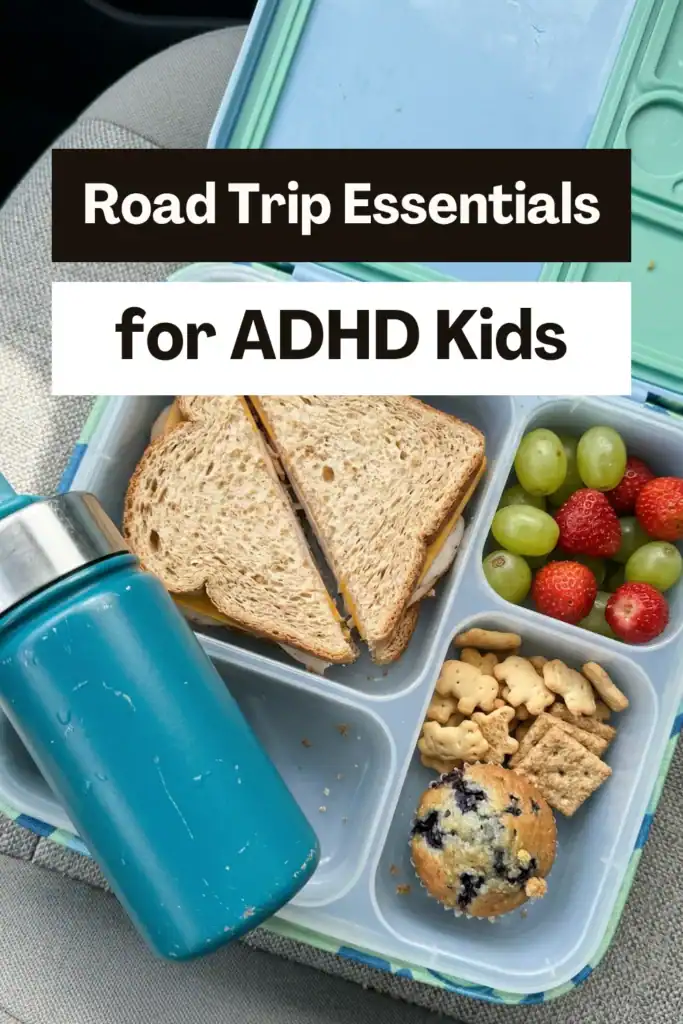
Hunger and ADHD are not a good combination.
We found that having structure around food made a huge difference.
Instead of handing out random snacks throughout the day, we packed snack boxes ahead of time. Each one had a mix of things. Something filling, something fresh, and something fun.
It stopped the constant asking, reduced overwhelm, and made it easier for her to manage expectations.
Think simple:
- Snack boxes with a mix of lunch items, fruit, crisps, and a treat
- Water always within reach
- Juice as an option, not the default
Read Next: Stress Free Flights – 25 Baby Travel Essentials
3. Keep Entertainment Simple (and Low Stress)

You don’t need to constantly entertain, but having a few go-to options helps avoid that “I’m bored” spiral.
What worked well for us:
- Mess-free colouring (those water pens that reveal colour on paper)
- A simple road trip scavenger hunt (spot a yellow car, a cow, a church, a motorbike)
- Reusable Sticker Books – these are easy to remove if they happen to make it onto the car windows
- Silly conversation starters like “would you rather”
- A lap tray or activity pad to keep everything contained

Melissa & Doug Water Wow

Kids Lap Tray for Car
4. Build Comfort Into the Journey
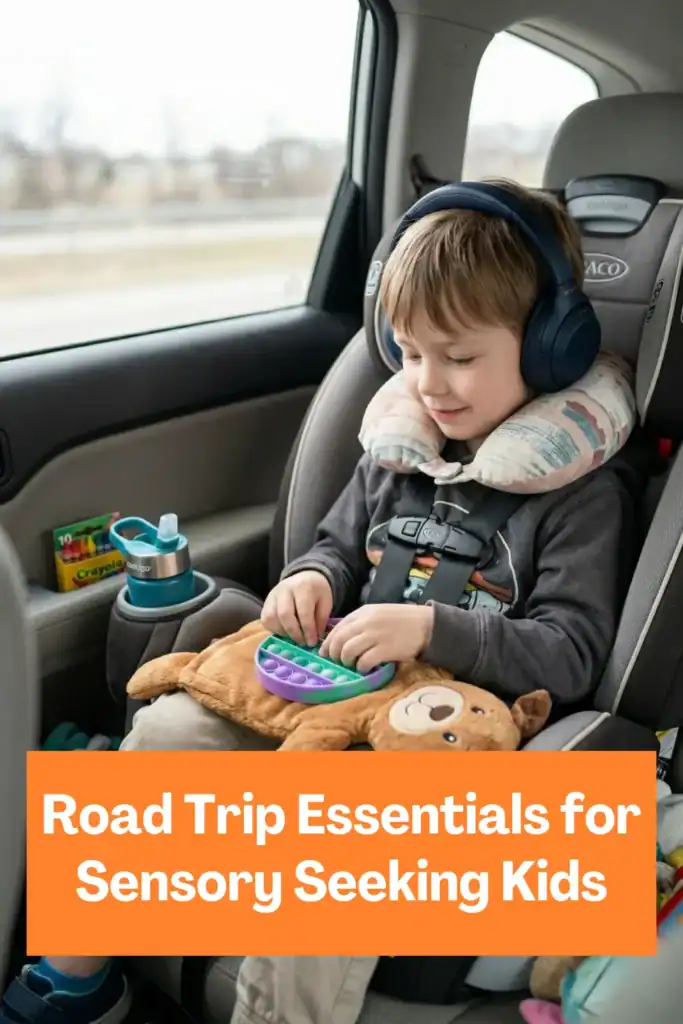
This is the part we used to overlook, and there are actually so many things to take into consideration to make sure that a sensory seeker is comfortable for long stretches of time.
Things that can help:
- A neck pillow
- A small weighted lap pad
- Sensory toys for fidgeting
- Bluetooth Headphones for quiet time – opt for a pair that are noise cancelling too
- A window shade cover to block out direct sunlight
You could also print a simple map of the route so they can see where you were and how far you still have to go.
That visual alone can reduce a lot of the “how much longer?” questions.

This Mewaii Weighted Stuffed Animal can be adjusted according to your child’s age, and be warmed up for cooler evenings

The iClever Bluetooth Headphones double as noise cancelling and have a Safe Volume feature specifically designed for young kids.
5. Make Time More Predictable
Time can feel very abstract, especially for ADHD kids.
So instead of vague answers, start using clearer cues.
Simple things like:
- “Now we’re driving for a bit, then we’ll stop for lunch”
- Using “now and next” language to set expectations
- Letting them know roughly when the next break would be
It won’t eliminate the questions completely, but it help them feel more grounded.
6. Plan More Breaks Than You Think You Need
This one is non-negotiable. Sitting for long stretches isn’t realistic for the best of us, so you can expect it to lead to a lot of frustration.
Start planning regular stops for movement, reset, and a run around to burn off some energy.
What Makes the Biggest Difference
When we look back, it wasn’t one big thing. It was a series of small adjustments that made the whole experience feel easier.
We weren’t constantly reacting anymore, we were anticipating, and that changed everything.
A Simple Way to Start
If you’re planning a road trip with kids, you don’t need to overhaul everything.
Start with this:
- Prep snacks ahead of time
- Add one or two easy activities
- Build in more breaks than feels necessary
- Give your child a simple idea of what to expect
That alone can shift the tone of the whole trip.
Final Thought
We used to see road trips as something to get through, but now they’ve become one of the parts we actually enjoy most.
Not because everything runs perfectly, but because we’ve found a way to make it work for her, not against her.
I hope some of these tips help make your next road trip feel a little more manageable and that you’re able to enjoy the experience for what it is.
ADHD doesn’t mean our children can’t enjoy the same things as everyone else. It just means we sometimes need to approach things a little differently.
And often, it’s those small adjustments that make the biggest difference.