

This post may contain affiliate links. Disclosure here.
If you’ve ever opened the back door, pointed outside, and hoped for the best, same.
I genuinely thought that setting up a decent outdoor space with a few toys would be enough. Skye would head out, find something to do, and I’d get twenty minutes of quiet. That was the plan, anyway.
What actually happened was a lot of “I’m bored,” a lot of coming back inside, and me quietly Googling whether other kids were like this or whether it was just ours.
Skye has never been particularly outdoorsy, and independent play, inside or outside, has always been something we’ve had to build gradually and deliberately. If you’re parenting a child with ADHD, you probably know exactly what I mean. It’s not that they don’t want to play. It’s that getting started is hard, staying engaged is harder, and too many options can tip the whole thing into overwhelm before it’s even begun.
So I stopped trying to build the “perfect” outdoor setup and started thinking about what actually supports how ADHD kids play. This post is what came out of that.
Why Outdoor Play Doesn’t Always Come Naturally for ADHD Kids
There’s this assumption that kids are just naturally drawn outside and that fresh air and a bit of space is all they need. And for some kids, maybe that’s true.
For a lot of ADHD kids, it’s really not.
Getting started is often the first hurdle. Then staying engaged. Then managing the overwhelm that comes when there’s too much to choose from and no obvious place to begin. What looks like not wanting to play is usually a kid who genuinely doesn’t know how to get into it without some support.
Once I understood that, I stopped trying to solve it with more stuff and started thinking about the environment and how involved I actually needed to be to help her get going.
What Actually Helped Us Build Independent Outdoor Play
The biggest shift for us had nothing to do with toys or the setup. It was connection.
Instead of sending Skye outside and hoping she’d find her groove, I started going out with her. Sitting alongside her, getting into whatever she was doing, helping her get started. Not directing it, just being there. Twenty or thirty minutes of that, and she’d settle into it. Once she was engaged I could start to step back, staying nearby but not hovering, and that’s when independent play actually started to happen.
It sounds simple, and honestly it is, but it took me a while to realise that I wasn’t failing by needing to do that. I was just parenting a kid who needed a bit more of a runway before she could take off on her own.
And I think that’s true for most kids, not just ADHD kids. Independent play isn’t something they arrive with, it’s something you build together, gradually, until they don’t need you there anymore.
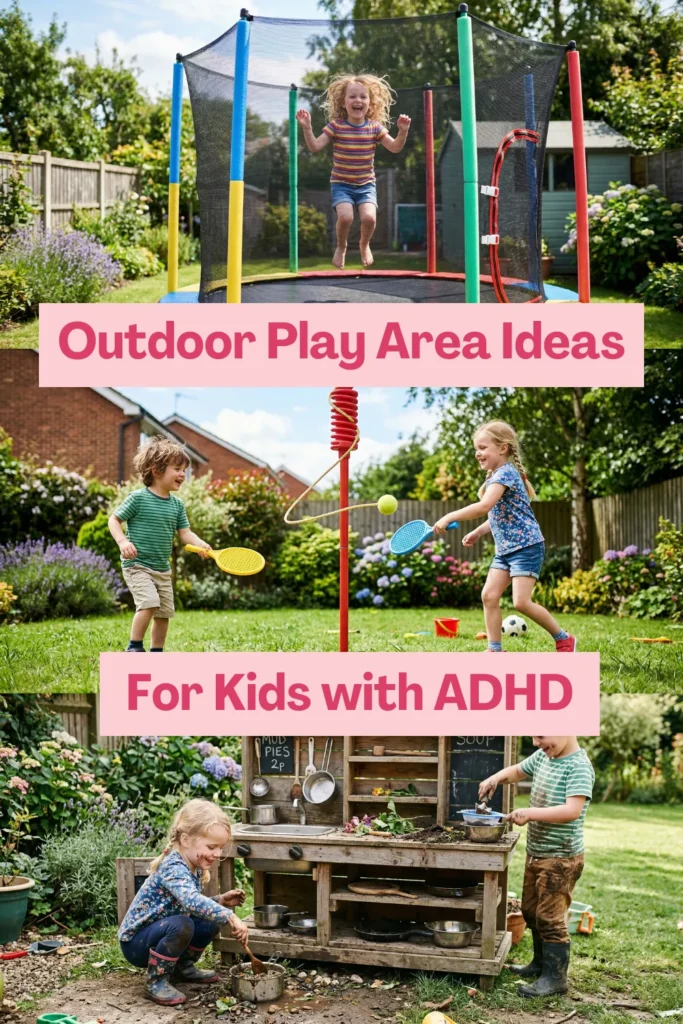
Simple Outdoor Play Area Ideas That Actually Work
1. Movement Play (Burn Energy First)
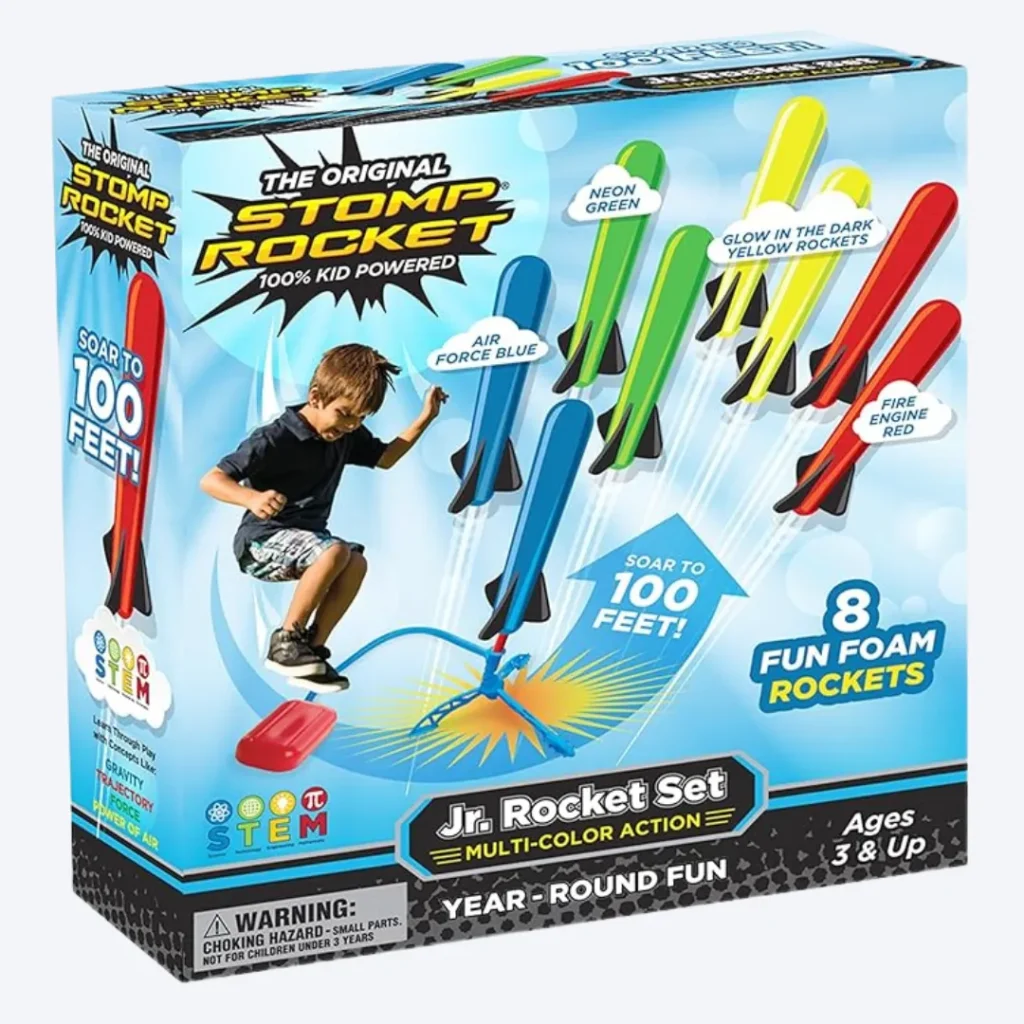
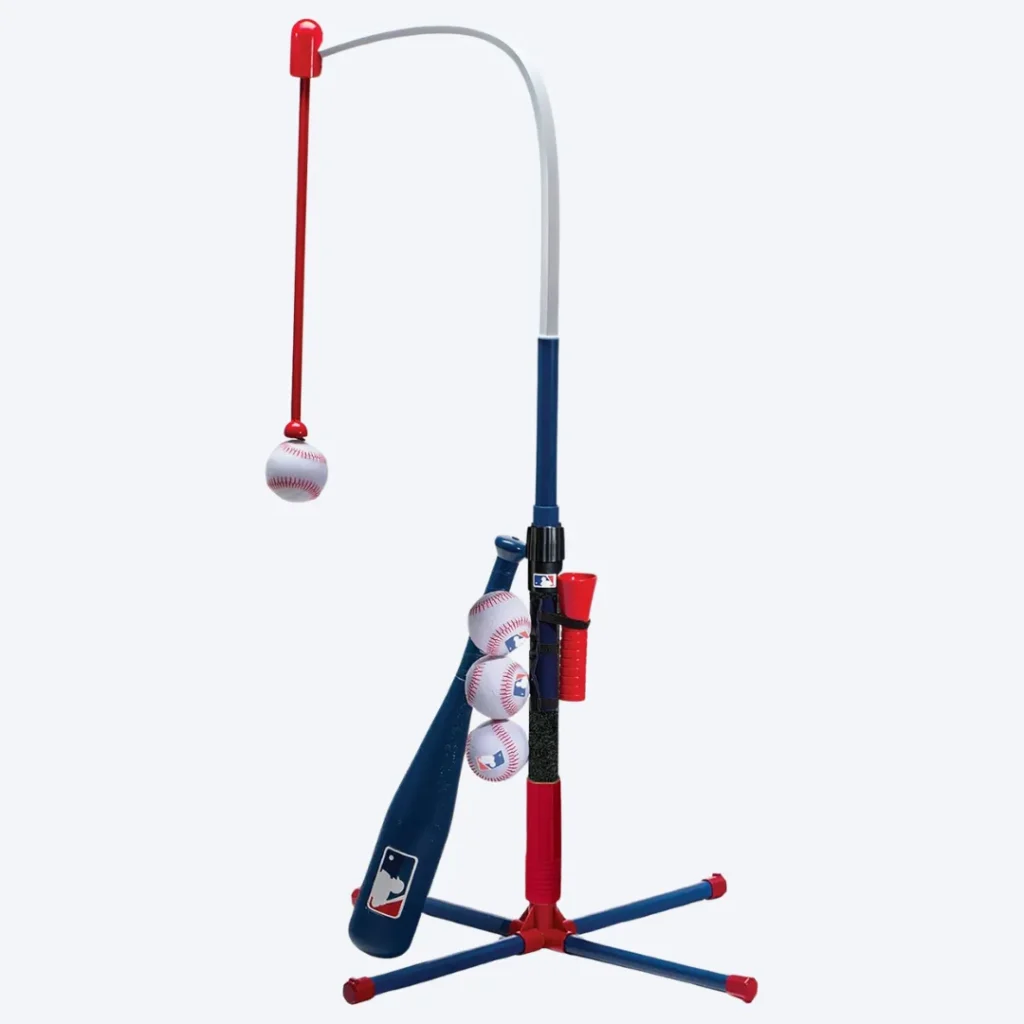
Before anything else, ADHD kids usually need to move. Not as a reward for good behaviour or something to do after the “real” activities, but rather as the starting point. Getting that energy out first is often the difference between chaotic, unfocused play and the kind that actually lasts.
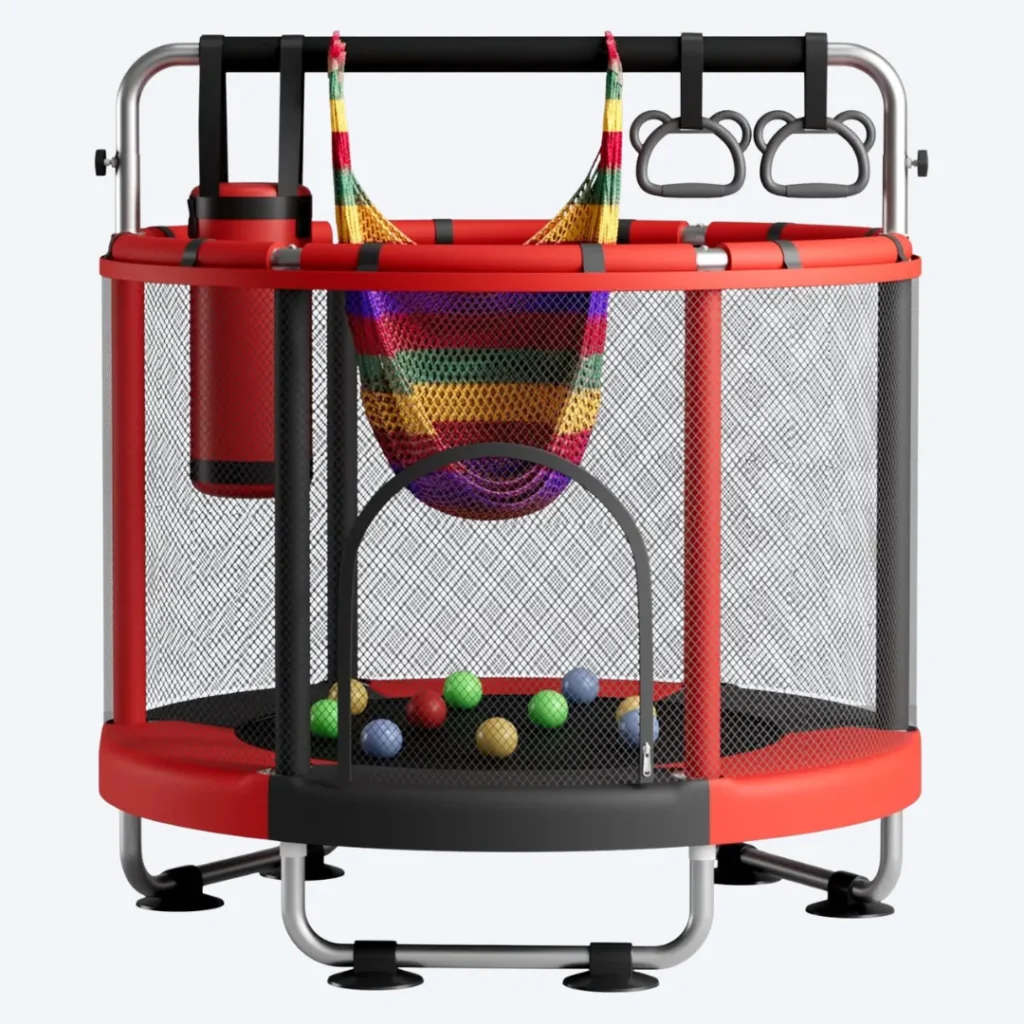
A trampoline is one of the most consistently recommended things for ADHD kids, and honestly, we get it! Ours gets used more than almost anything else we own. We actually bought ours for indoors originally, and it works just as well outside, which makes it a really practical buy because you’re not limited to one season or one space.
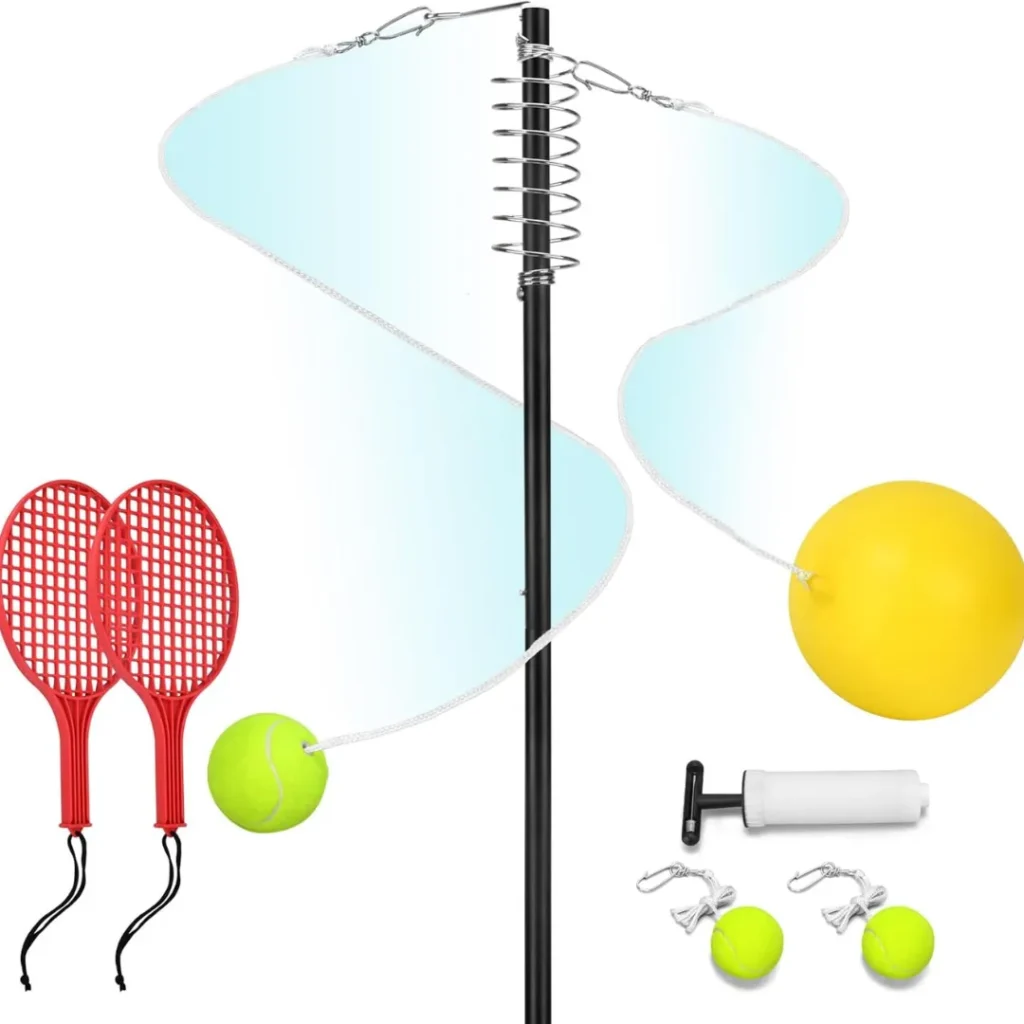
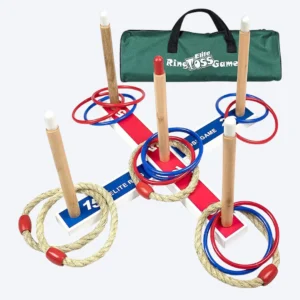
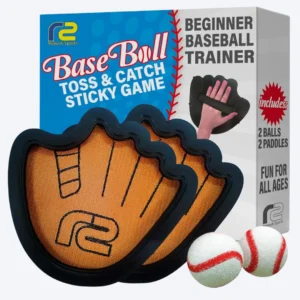
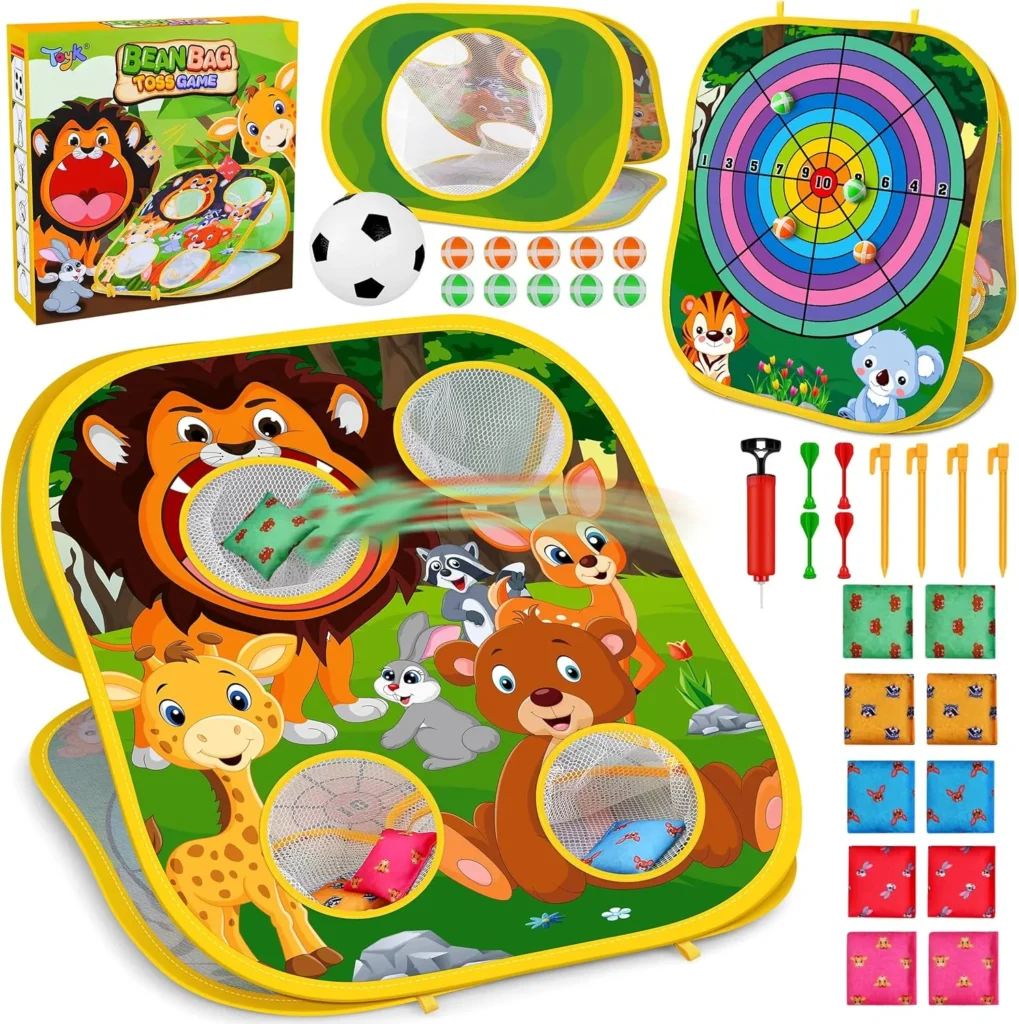
For active games that have just enough structure to hold attention, things like Swingball, ring toss, a bean bag toss, or a velcro catch set are all worth considering. The repetitive, goal-based nature of those games (throw, catch, aim, repeat) tends to work really well for ADHD kids because there’s always something to do next without it being overwhelming.
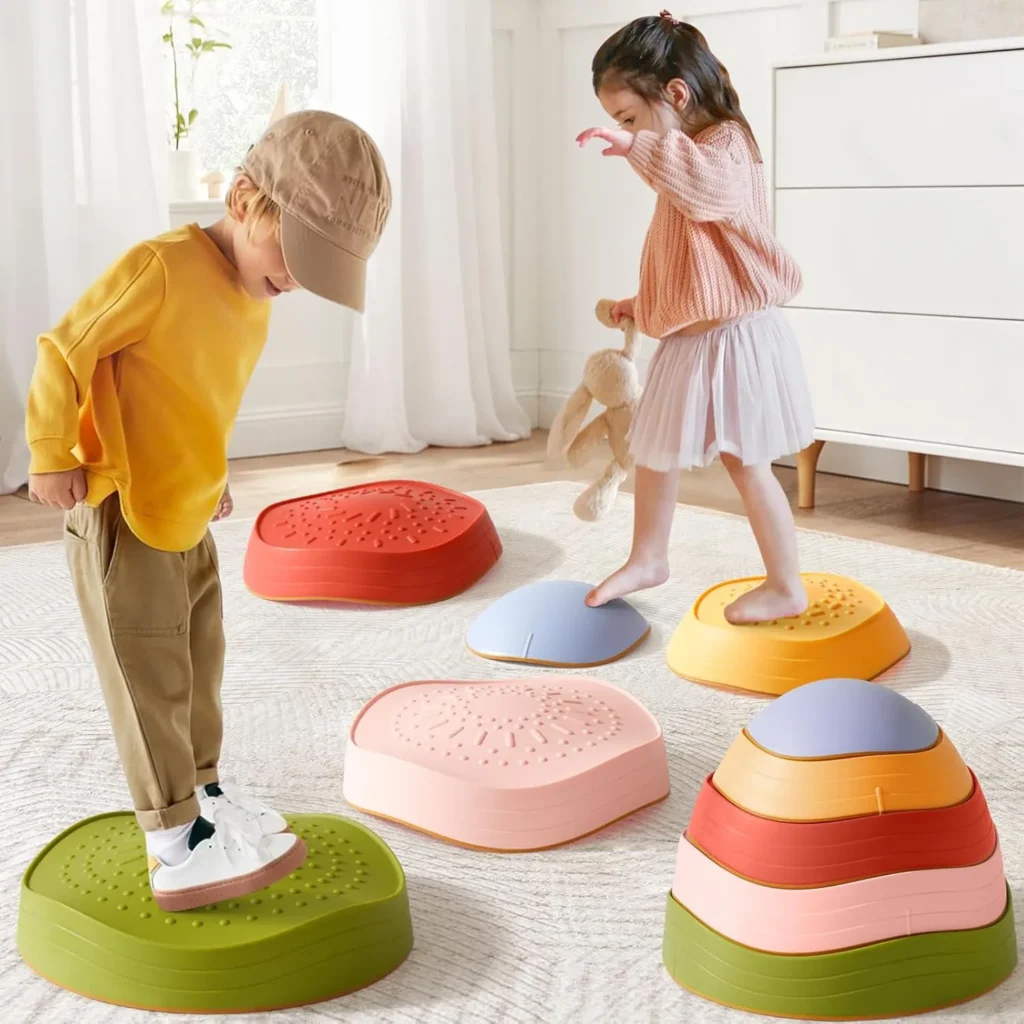
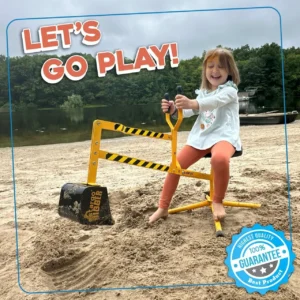
Stepping stones are another good one, and they pull double duty. They get kids moving and the textured surfaces add a sensory element at the same time. You can set up a simple course with them and it gives the movement a bit of structure rather than just running around with no direction.
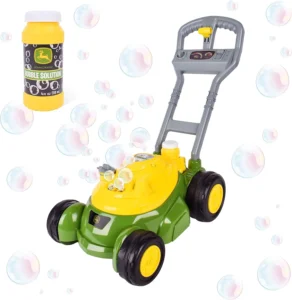
A bubble push mower is a brilliant option for younger kids because they’re moving, they’re chasing bubbles, and they have absolutely no idea they’re burning energy.
2. Sensory Play (Calm the Nervous System)
Sensory play tends to get lumped in with messy play, but for ADHD kids it’s actually one of the most regulating things you can offer. The right kind of sensory activity can bring a dysregulated kid back down in a way that asking them to “calm down” never will.
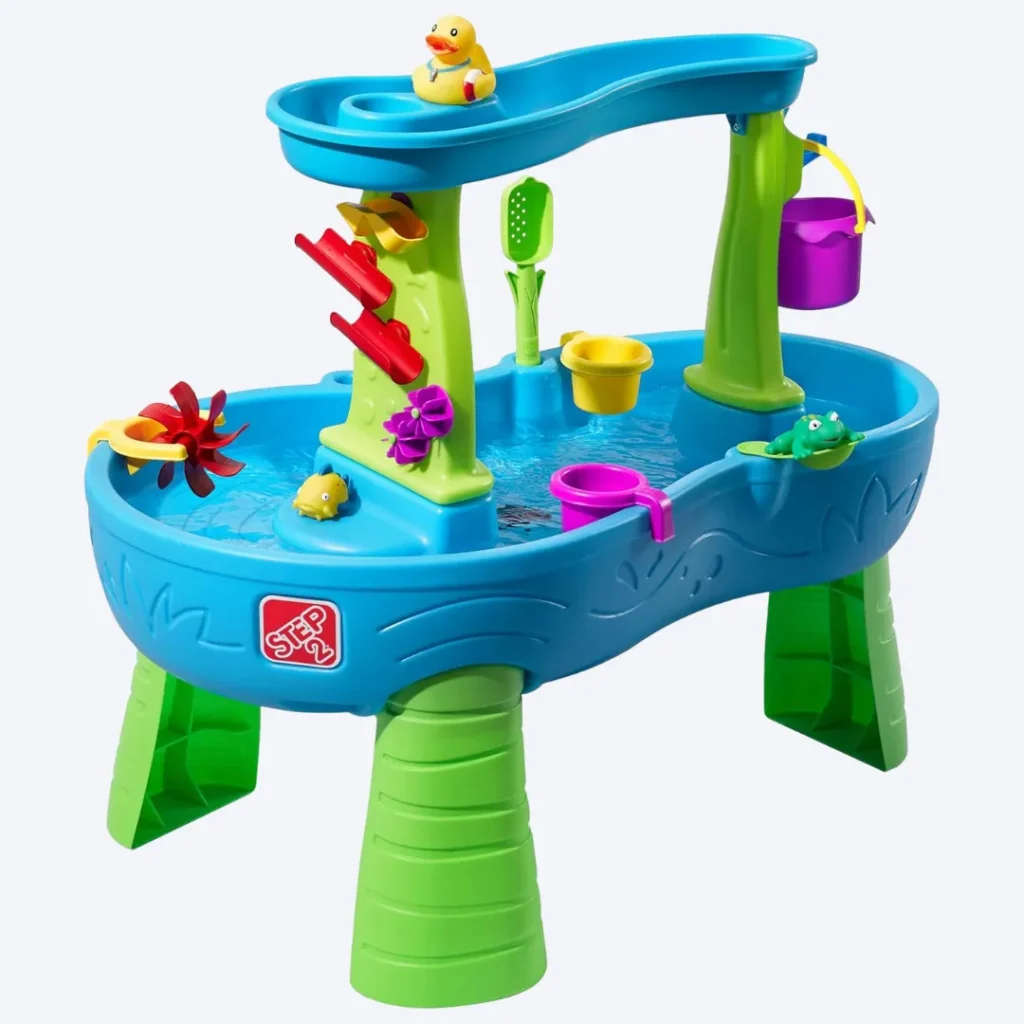
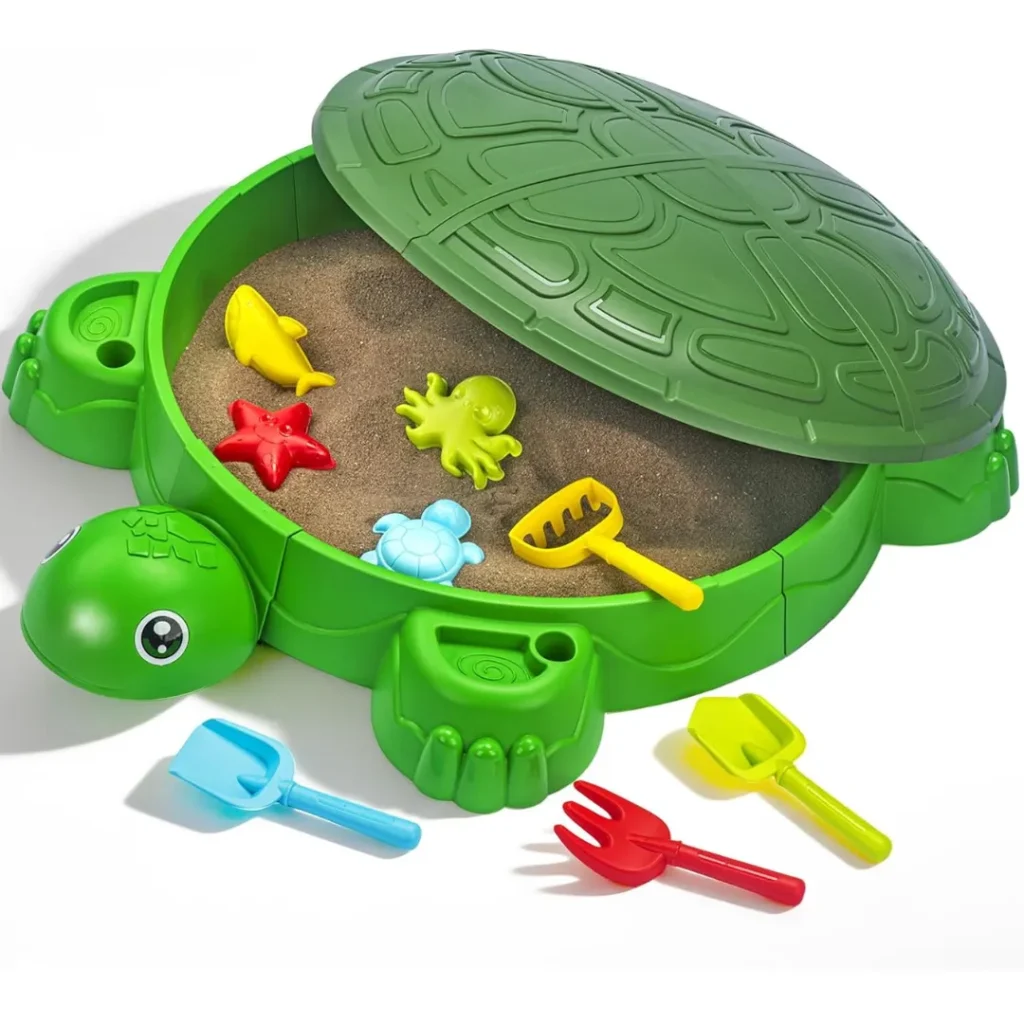
The good news is that it doesn’t need to be complicated. A container of water with a few cups for pouring, a sandbox with a lid to keep it clean between uses, or different textures to explore are all genuinely effective options. The key is keeping the setup simple as too many elements could tip from calming into overwhelming, which is the opposite of what you’re going for.
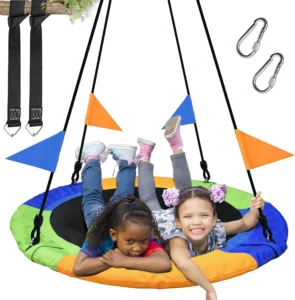
An outdoor swing is another one worth considering if you have the space and something sturdy enough to hang one from. The rhythmic, repetitive movement is brilliant for sensory regulation and a lot of ADHD kids will gravitate towards it naturally.
If your child is a sensory seeker, it’s also worth paying attention to what they’re drawn to already. That’s usually a good indicator of where to start.

If you want to go deeper on sensory play specifically, I put together a full guide on simple sensory play ideas and fine motor toys that’s worth a read alongside this one.
3. Fine Motor & Focus Play
Fine motor play doesn’t get talked about as much in the context of outdoor play, but for a lot of ADHD kids it’s actually one of the areas that needs the most support. Kids who are constantly on the go, a little unsteady, and resistant to anything that requires sitting still and concentrating are often the ones who need this kind of play the most.
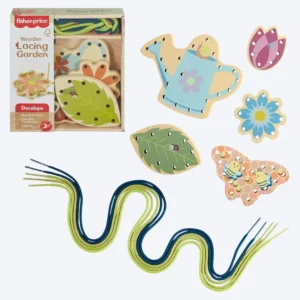
Skye struggles with fine motor skills, and finding activities that worked for her without turning into a battle took some trial and error. Threading was one that genuinely helped. It builds those fine motor skills quietly, without feeling like practice, and there’s something about the focus it requires that also builds patience over time. Not overnight, but gradually.
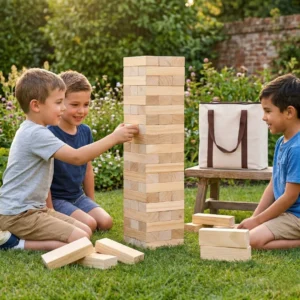
Stacking toys are another good one, with a small caveat: if your child is anything like Skye, they will spend approximately thirty seconds stacking and the rest of the time knocking it down. Which is fine, actually. There’s still coordination and anticipation involved, and if it’s getting them engaged and laughing then it’s doing its job.
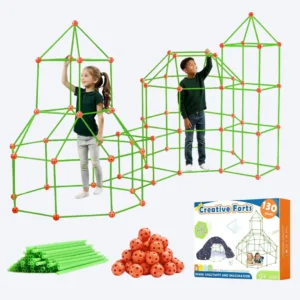
Building sets, particularly the kind that involve creating dens or forts, are brilliant for this age group. We have a fort kit with a sheet cover and once it’s built, Skye will play in it for days. There’s something about having a small, enclosed, self-made space that ADHD kids seem to really love. It’s calm, it’s theirs, and it gives them somewhere to decompress without you having to suggest it.
4. Open-Ended Play (Where They Stay the Longest)
Open-ended play is exactly what it sounds like. No rules, no right way to do it, no end goal. Kids create their own play, follow their own logic, and because there’s no way to do it wrong, there’s nothing to get frustrated about. For ADHD kids especially, that freedom can be genuinely liberating.
It’s also, in our experience, where they stay engaged the longest.
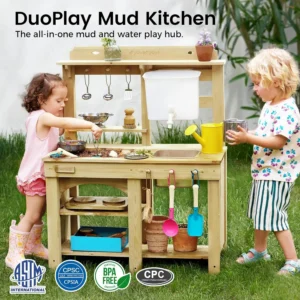
Our mud kitchen has been one of the best things we’ve added to the garden, and both Skye and her little brother use it constantly. There’s something about the combination of water, mud, and being allowed to get dirty that just works. It’s messy, yes, but it’s the kind of messy that keeps them busy for a long time and costs you nothing once you have it set up.
If you’re not ready for a mud kitchen yet, you don’t need to buy anything at all to get started with open-ended play. Some of Skye’s best play as a toddler happened with whatever she could pull out of the kitchen cupboards. Tupperware, wooden spoons, containers of different sizes. She’d gravitate towards them over store bought toys, and honestly they kept her more engaged. There’s something about everyday objects that fires up a child’s imagination in a way that purpose-built toys sometimes don’t.
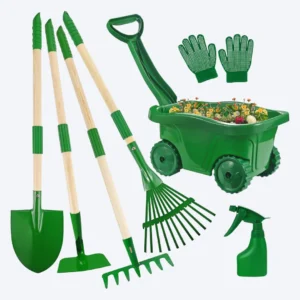
A kids gardening set is another brilliant option for this kind of play. A toy wheelbarrow, some gardening tools, and a watering can give them just enough structure to get started, but where they take it after that is entirely up to them. Digging, watering, filling the wheelbarrow and tipping it out again. It also introduces them to the garden itself as a space worth exploring.
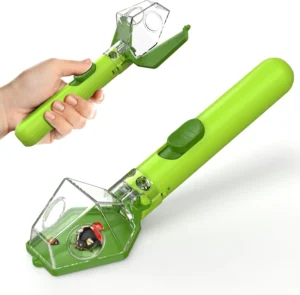
And if your child is the kind who notices every bug and creature they come across, an insect trapper with a magnifying glass is a really simple way to turn that curiosity into extended play. Bug hunting can genuinely occupy an ADHD child for a surprisingly long time because there’s always something new to find.
Where to Start (If You’re Feeling Overwhelmed)
If you’ve read through all of this and you’re not sure where to begin, that’s completely normal. It can feel like a lot when you’re already stretched thin and your child is already dysregulated before you’ve even thought about outdoor play.
So here’s the simplest possible starting point.
Pick one thing. Just one. If your child has a lot of energy to burn, start with movement. If they’re frequently dysregulated, start with something sensory. If they’re drawn to imaginative play, pull out whatever you have in the kitchen cupboards and take it outside.
Then go out there with them. Don’t send them out and hope for the best. Sit with them, get into it, and give them that runway to settle. Even twenty minutes of that changes things.
You don’t need to set up four different play zones or order a bunch of products before you start. The setup matters much less than your presence does, at least in the beginning.
Start small, stay consistent, and add things gradually as you figure out what actually holds their attention. That’s genuinely all there is to it.
Final Thoughts
You don’t need a perfect setup. You don’t need a garden full of toys, and you definitely don’t need your child to walk outside and play independently from day one.
What made the difference for us was keeping things simple, focusing on the types of play that actually suit how Skye is wired, and being willing to sit with her long enough for her to feel settled before I stepped back. That’s it, really.
Some days still don’t go to plan… She might be dysregulated before we even get outside, or nothing holds her attention and we end up back indoors within ten minutes. That still happens. But on the whole, outdoor play has gone from something that felt stressful and defeating to something we both actually enjoy, and that’s taken a lot of trial and error to get to.
If you’re just starting out with this, don’t try to do everything at once. Pick one type of play, set it up simply, and go out there with them. That’s genuinely the best place to start.