
This post may contain affiliate links. Disclosure here.
If you’ve been on Pinterest or TikTok lately, you’ve probably noticed something: 2000s toys are everywhere. Tamagotchis, Silly Putty and LEGO sets with actual instructions. The Y2K toy revival is real, and as an ADHD parent, I think it might be one of the best things to happen to our kids’ playrooms!
Pinterest reported a 140% surge in searches for 2000s-era kids’ toys in 2026. But beyond nostalgia, there’s a really compelling reason why these toys keep showing up in ADHD communities online: they work with the ADHD brain, not against it.
I’ve rounded up 15 of the best 2000s-inspired toys currently available on Amazon, split into categories by the type of benefit they offer ADHD kids, because not all retro toys hit the same.
Why Are 2000s Toys So Good for ADHD Brains?
Before we get to the list, it’s worth understanding WHY these toys keep popping up in ADHD spaces. Unlike today’s flashy digital toys with constant notifications and autoplay, 2000s toys are:
- Open-ended — no ‘winning’, no screen time limits to fight about
- Tactile — hands-on play provides the sensory input ADHD brains crave
- Low-pressure — no complex instructions, no overstimulating sounds
- Dopamine-friendly — the instant feedback loop (squish, click, build) suits ADHD reward processing
Sensory & Fidget Toys: For Hands That Need to Stay Busy
If your child struggles to sit still during homework or story time, these are your secret weapon. Keeping hands busy with a tactile toy actually helps the ADHD brain focus. It’s a brilliant regulation tool!
Here are a few more Simple Sensory and Fine Motor Development Play Ideas
Silly Putty
Why it’s back: The original Silly Putty has never really gone away, but it’s having a serious Y2K revival online.
ADHD benefit: Stretching, bouncing and squishing putty provides quiet proprioceptive input, making it one of the best classroom-safe fidget tools available. It’s been recommended by ADDitude Magazine and OTs for years.
Age: 3+ | Price: $6 – $15

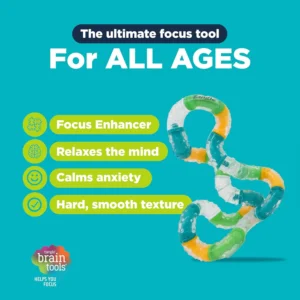
Tangle Jr.
Why it’s back: The interconnected segments feel straight out of every 2000s classroom.
ADHD benefit: Silent, portable, and satisfying to twist and reshape endlessly. Keeps hands busy without disturbing others and approved in many classrooms.
Age: 3+ | Price: $10 – $25
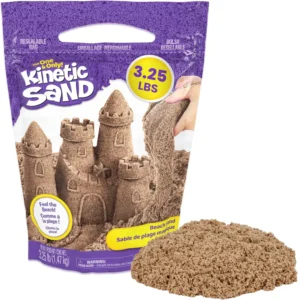
Kinetic Sand
Why it’s back: The ASMR and sensory play communities have made kinetic sand huge again.
ADHD benefit: Tactile toys like kinetic sand offer a grounding effect, keeping hands busy while the mind relaxes. Research supports sensory integration approaches for ADHD.
Age: 3+ | Price: $10–$25
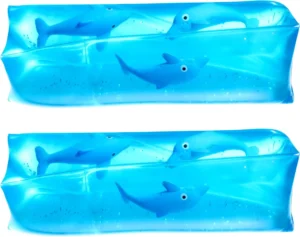
Water Wrigglers
Why it’s back: It’s near impossible to put down, low stimulation, genuinely calming and a Classic 2000s toy.
ADHD Benefit: Water Wrigglers off both tactile + visual sensory input simultaneously. Kids get proprioceptive input from squeezing. Classic ‘I can’t stop touching this’ fidget toy.
Age 2+ | Price $10
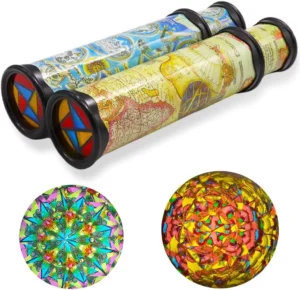
Kaleidoscopes
Why it’s back: The Kaleidoscope is a classic retro toy. It’s affordable, calming, and not to mention noise and mess free! It’s also a great addition to a calming corner/nook.
ADHD Benefit: Visual stimulation is repetitive and predictable which means calming for overstimulated ADHD brains. It’s good for transitions, wind-down time, or sensory breaks.
Age 5+ | Price: $7-$15
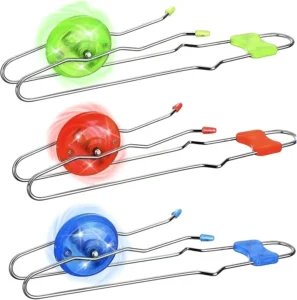
Gyro Wheel
Why it’s back: Retro STEM toys are having a moment again, and the Gyro Wheel taps straight into that curiosity-led play that defined a lot of 2000s toys
ADHD benefit: The spinning motion is instantly calming and visually engaging (similar to a fidget spinner, but more absorbing). Getting it started takes a bit of coordination, which builds fine motor control, and once it’s spinning, the subtle vibration adds a sensory element through the hands. For kids who tend to hyperfocus, the “how does this even work?” factor can hold attention for long stretches without overstimulation.
Age: 6+ | Price: $10-$20
Building Toys: For Hyperfocus You Can Actually Use
ADHD kids often get a bad reputation for not finishing things, but give them a LEGO set or a construction challenge and watch what happens. Building toys are perfect for channelling hyperfocus into something tangible.
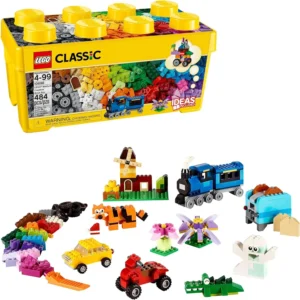
Classic LEGO Sets
Why it’s back: LEGO has remained iconic, but the demand for classic City and Space sets has spiked with the Y2K aesthetic trend.
ADHD benefit: Step-by-step instructions provide structure, while the building process engages sustained attention. Completing a build gives a huge dopamine reward which is important for ADHD brains that struggle with delayed gratification.
Age: 6+ | Price: $25–$150
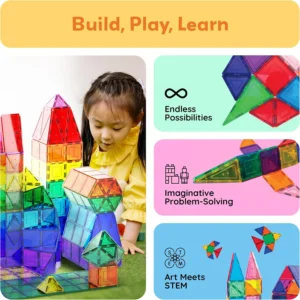
Magnetic Tiles
Why it’s back: A staple of 2000s classrooms, magnetic tiles are everywhere on parenting TikTok.
ADHD benefit: Open-ended building with no ‘wrong’ answer reduces frustration. The satisfying magnetic snap provides instant tactile feedback, a small but meaningful dopamine hit.
Age: 3+ | Price: $18-$25
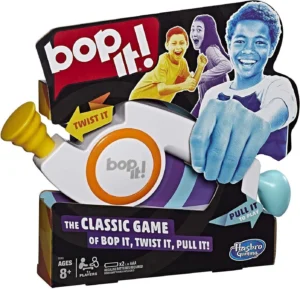
Bop It
Why it’s back: Straight out of the 2000s sleepover era, Bop It has made a comeback as parents rediscover fast, no-setup games that get kids laughing (and a little competitive).
ADHD benefit: The rapid-fire commands (“bop it, twist it, pull it”) train quick switching between actions, which builds cognitive flexibility and impulse control, two areas many ADHD kids struggle with. It’s multi-sensory (hearing + movement), which helps hold attention, and the increasing speed keeps it challenging enough to stay engaging. The instant feedback (you’re either still in or you’re out) taps directly into how ADHD brains respond to rewards.
Age: 6+ | Price: $15
Creative Toys: For the ADHD Kid Who Makes Everything Into a Project
Many ADHD kids are intensely creative, they just need an outlet that doesn’t require sitting still for long. These are the 2000s classics that let them create on their own terms.
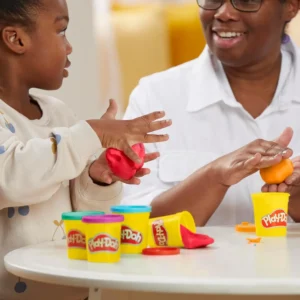
Play-Doh
Why it’s back: Play-Doh sets are having a revival as parents push back on screen time.
ADHD benefit: Moulding and squishing Play-Doh helps release excess energy while stimulating creativity. It also builds hand strength and fine motor control, both areas that can be delayed in ADHD kids.
Age: 2+ | Price:$8–$25
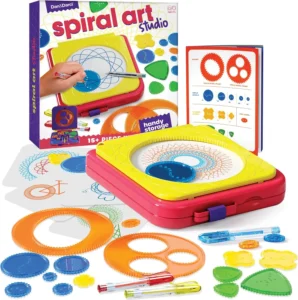
Spirograph
Why it’s back: The retro geometric design tool has come back in a big way on craft TikTok.
ADHD benefit: The repetitive, patterned motion is meditative for ADHD brains. It’s structured enough to feel achievable, creative enough to stay interesting which is a rare balance.
Age: 6+ | Price: $10-$15
Movement Toys: For the Kid Who Cannot and Should Not Sit Still
ADHD kids are wired to move, and that’s not a problem to fix, it’s a need to meet. These 2000s-era active toys turn movement into play, which is exactly what the ADHD brain needs.
Here are some more of our favorite Movement-based outdoor toys
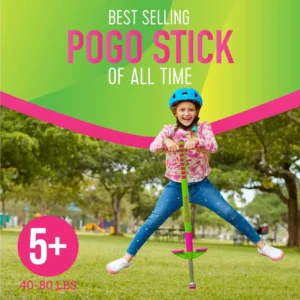
Pogo Stick or Skip-It
Why it’s back: Outdoor analogue play is trending hard as a backlash to screens.
ADHD benefit: Jumping and bouncing provides vestibular and proprioceptive input, two sensory systems that directly support regulation in ADHD kids. Even 5 minutes of jumping before homework can improve focus.
Age: 5+ | Price: $50
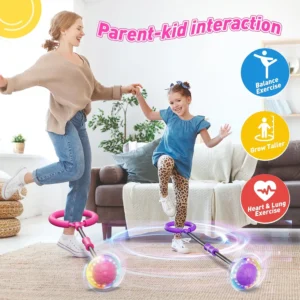
Skipping Rope
Why it’s back: The 2000s playground classic is everywhere on nostalgia feeds.
ADHD benefit: Rhythmic, repetitive movement is inherently regulating for ADHD brains. Skipping also requires just enough coordination to keep the brain engaged and hits that sweet spot of challenge that holds ADHD attention.
Age: 5+ | Price: $10-$15
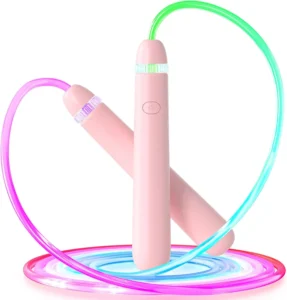
Stomp Rocket
Why it’s back: A true 2000s playground staple that’s quietly resurfaced as parents look for simple, screen-free toys that actually hold attention. It’s all over social again because it just works.
ADHD Benefit: The stomp action gives strong proprioceptive input (that “heavy work” kids often seek), while the instant launch delivers a quick reward. The “how far will it go?” element naturally pulls kids back in for repeat play.
Age: 3+ | Price $25-$50
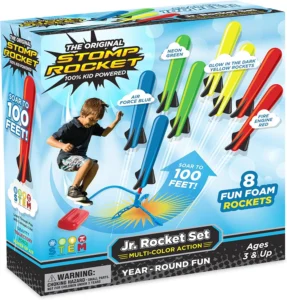
Digital Companions: For the Responsibility + Reward Loop
Okay, this one might be controversial, but hear me out. Digital pets like Tamagotchi are having a huge revival, and they’re actually surprisingly good for ADHD kids when used with boundaries.
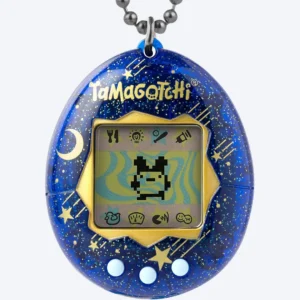
Tamagotchi (Uni or Nano reissue)
Why it’s back: Tamagotchi sold out multiple times in 2025–2026 as the Y2K revival hit peak nostalgia.
ADHD benefit: The care routine (feed, play, clean) creates a structured responsibility loop, giving ADHD kids a consistent daily anchor. The immediate feedback when their pet responds rewards the ADHD brain’s need for instant gratification.
Important note: Set screen-time boundaries. Use it as a reward activity, not a constant distraction.
Age: 6+ | Price: $20-$40
The Bottom Line: Sometimes Old-School IS the Answer
The 2000s toy revival isn’t just nostalgia. For ADHD families, it’s a genuinely useful trend. These toys offer something that most modern digital alternatives can’t such as sensory input, open-ended play, and a dopamine hit that doesn’t require a screen.
Does every ADHD kid need every toy on this list? Absolutely not. But if you’ve been looking for something that meets your child where their brain is, without the meltdown that comes at the end of screen time, these retro picks are a really good place to start.
Have you tried any of these with your ADHD kid? I’d love to know what worked (or didn’t). Drop it in the comments.