
This post may contain affiliate links. Disclosure here.
There was a point where I realised I was narrating my entire morning.
Shoes.
Teeth.
Bag.
Jacket.
Again.
And again.
If you’re parenting a child with ADHD, you probably know the feeling. You’re not teaching the routine, you’re repeating it.
But ADHD doesn’t struggle with knowing what to do.
It struggles with holding the steps long enough to follow through.
When we first began navigating Skye’s ADHD diagnosis (I share more about our full story here), I assumed clearer instructions would solve the chaos. It took time, and a lot of humility to realise we didn’t need better reminders.
We needed better systems.
And when you add a strong-willed streak (hello ODD dynamics), constant verbal prompting quickly turns into power struggles.
So instead of saying it louder, we redesigned the environment.
1. We Designed the Morning to Flow Through the House
We don’t have a Pinterest-perfect “launch pad.”
What we have is flow.
Upstairs:
- Get dressed
- Have milk
- Take medication
Downstairs:
- Breakfast in the kitchen
- Brush teeth in the downstairs bathroom
Out the door:
- Shoes
- Jacket
- School bag
Everything she needs to leave the house lives by the front door.
We added a simple shoe rack right at the entrance so her shoes have a clear home instead of being kicked off wherever she lands. Her backpack stays there too. No wandering the house looking for it.
Reducing movement between locations reduced friction more than any motivational speech ever did.
2. The Night Before Sets Up the Morning
We also have a short nighttime checklist:
- Bath
- Brush teeth
- Lay out school clothes
It’s not elaborate, but reducing the number of decisions required in the morning makes a big difference.
ADHD brains burn through executive function quickly. If we can remove even two decisions before 8am, that matters.
3. The Checklist Changed More Than I Expected
Our biggest issue wasn’t forgetfulness, it was resistance.
Skye knows the routine. She can tell you every step. But holding multiple tasks in working memory while transitioning between rooms is hard.
So we made it visual.
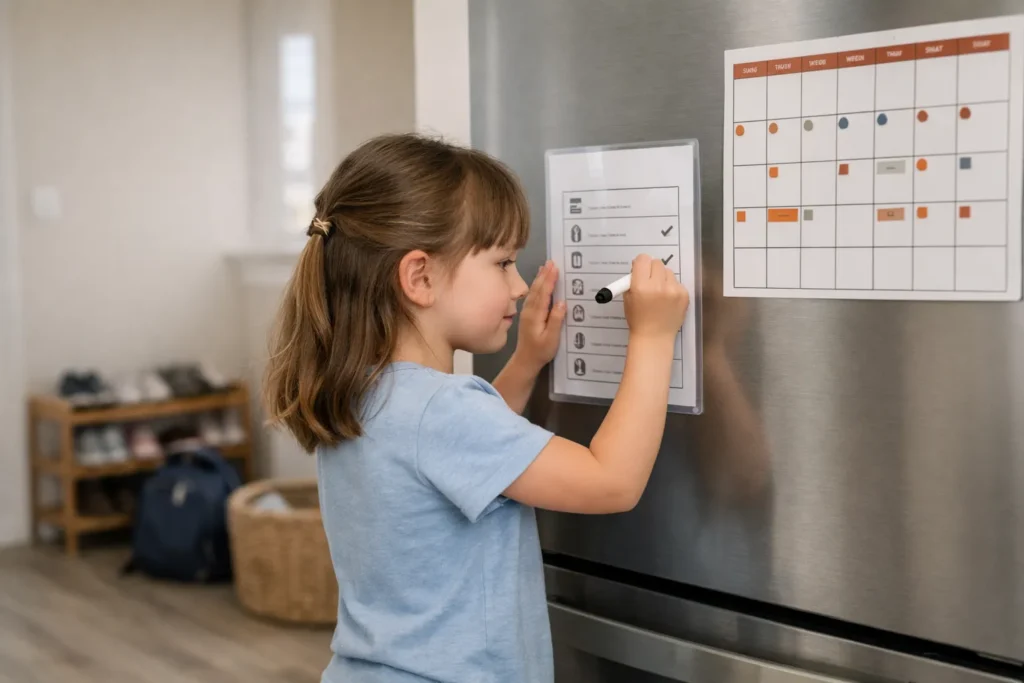
We use a simple printed checklist which we laminated (a basic home laminator like this one works perfectly for this) and she physically ticks off each step.
And she loves it.
It doesn’t mean she suddenly does everything independently. Some mornings she still struggles. We encourage independence, but we step in before frustration tips into a meltdown.
Starting the day regulated matters more than proving a point and for us, good enough is better than not trying at all.
The checklist gives her clarity and it gives us fewer arguments.
That’s a win.
4. Timers Don’t Work for Every ADHD Child
We tried a visual timer early on (the classic Time Timer style clock that shows time disappearing).
For many ADHD kids, it’s a game changer, but for Skye it created urgency and urgency created anxiety.
Instead of pushing through that, we removed the pressure.
We don’t rush her for the bus. We build in buffer time as the adults. We carry the time-management load so she can focus on following her checklist calmly.
This is why no ADHD strategy is one-size-fits-all.
What works for one family might dysregulate another.
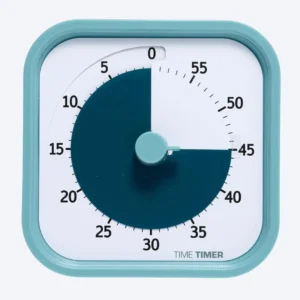
Time Timer 60 Minute Kids Visual Timer
A visual countdown clock that helps ADHD kids see time passing without constant reminders.
5. One Calendar. No Competing Systems.
We have one visible family calendar on the fridge (a simple magnetic whiteboard style works well for this).
It’s colour-coded:
- School days
- Weekends
- Sports
- Special activities
When Skye comes home, she wipes off “School” to show it’s done. She’ll wipe off other activities too, and that physical act of completion helps her process transitions.
No multiple apps.
No separate planners.
No confusion about what’s happening tomorrow.
One source of truth reduces anxiety for everyone.
6. We Leaned Into Where Things Naturally Land
Shoes used to pile up by the door, so instead of fighting it, we designed around it.
Shoe rack = Problem reduced
In her bedroom, I stopped trying to line up teddies neatly on the shelf every morning. (She has too many too fit on her bed)
Now she has one large basket where she dumps them in.
It’s faster, it’s manageable for her, and it gets done.
7. We Stopped Micro-Organizing Toys
I used to think organized meant beautifully categorized.
What it actually meant was too many steps.
We use an IKEA KALLAX unit, but any open cube storage like this works just as well.
Each basket holds a theme:
- Puzzles
- Cars
- Barbies
- Crayons & colouring
Visually, it reduces clutter because the baskets are solid, and practically, it works because she can:
Take one basket out.
Play.
Put it back.
No stacking.
No fiddly lids.
No multiple small containers.
If a system requires too many steps, it won’t survive a Tuesday afternoon.
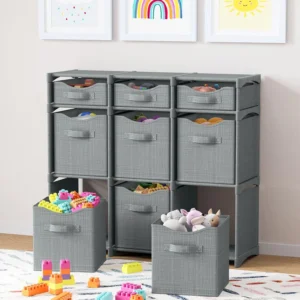
9 Cube Storage Organizer With Bins
Open cube shelving makes toy rotation simple and visible without overwhelming the room. Pair with solid fabric bins to reduce visual clutter while keeping everything easy to access and put away.
8. Store Simply and Visibly
ADHD homes don’t do well with hidden systems.
If you have to:
- Move something
- Open two lids
- Dig behind other items
It won’t get used properly.
We focus on:
- Open access
- Clear homes
- Fewer categories
- Easy drop zones
The simpler the system, the more likely it sticks.
What This Actually Changed
These tweaks didn’t “fix” ADHD, but they reduced friction.
They reduced me feeling like the nag and reduced Skye feeling constantly corrected.
And that shift matters.
When a child with ADHD (and sometimes ODD tendencies) feels constantly prompted, corrected, or rushed, resistance grows.
When the environment quietly supports the next step, independence grows instead.
If You’re Tired of Repeating Yourself, Start Here
✔ Make routines visible
✔ Reduce how many steps a task requires
✔ Let items live where they naturally land
✔ Use one calendar system
✔ Avoid micro-organising
✔ Build buffer time so urgency doesn’t drive the morning
ADHD-friendly homes aren’t about being perfectly organised.
They’re about designing around executive function realities.